New in the Log · Letter III ·What is left of my craft when I only orchestrate?
AI writes the code.You keep the authorship.
For developers who ship AI-written code and want to stand behind it at sign-off with a clear conscience.
I · The moment
"Almost right" is the expensive part.
What you see
The most common frustration with AI code is "almost right, but not quite": 66 % in the Stack Overflow Developer Survey 2025. The 2026 survey shows: only 48 % trust AI output when they can easily verify it, and 6.6 % trust it with important work decisions (Stack Overflow Developer Survey 2026). Reviews pile up. Things slip through. And the better the AI gets, the less anyone looks, so the sign-off matters more, not less.
What you feel
In one small controlled study (METR, early 2025, 16 experienced developers), participants were 19 % slower with AI tools and felt 20 % faster. METR itself now classes that result as outdated. Under that gap sits a quieter question: "What makes me a developer when code costs almost nothing?"
In principle
AI doesn't end developer authorship. It separates authorship from making. Authorship is not about who typed the code. It is about who signs off on it, in their own name. You don't have to write every line to own every decision.
"I move fast with AI and move mountains of work, but I am losing my passion for the work."
$ sign-off: blocked
Name one place where this code could be wrong.
If you can't, you haven't reviewed it yet. Then you haven't signed off yet.
// Name one place where this code could be wrong.
$ sign-off: blocked
Name one place where this code could be wrong.
If you can't, you haven't reviewed it yet. Then you haven't signed off yet.
// Pick a line of the diff first.
The diff looks fine. You're already about to click Ready for review.
If you'd like concrete offers for yourself: Join the waitlist
The enemy is not the AI. It is signing off on autopilot, and an identity that was built on typing.
II · Guide
Who is on your side
Ralph Kurz
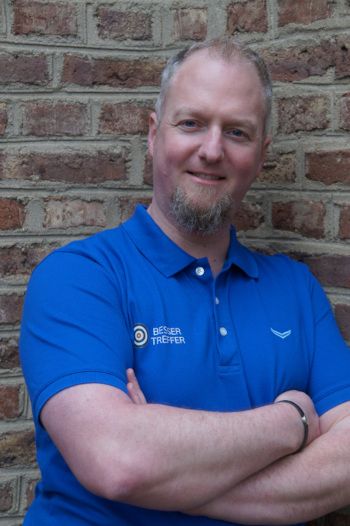
I am a fullstack developer, and I know this problem from my own work: the diff looks fine and you're already about to click Ready for review. So I built the solution I share here.
- Fullstack developer for 15+ years, in enterprise CMS projects
- Today I build with LLM integrations and AI-written code in my own projects, and I sign off with a clear conscience
- Certified mental trainer (Deutsche Mentaltrainer-Akademie)
- Work with precision athletes, artists and performers on focus under pressure: archery, darts, air rifle, dance, music
III · Plan
The plan
AI doesn't end developer authorship. It separates authorship from making.
If you write only 10 % of the code yourself, when is it still your work?
$ Before every sign-off
sign-off: blocked
1 · Issue
Intent - Own the why.
Do I have the why, and have I set what "done" means?
2 · WIP
Orchestration - Shape the making.
Have I shaped how it comes into being?
3 · PR
Verification - Set the proof.
What criteria do I check it against, up front?
4 · Sign-off
Judgment - Say yes deliberately.
Do I agree because it is right and it fits?
5 · Production
Accountability - Stand behind it.
Do I stand behind it when it breaks?
always
Craft - Keep your craft.
Do I understand it well enough to explain and change it?
center
Authorship - What arises when the cycle is run through.
Who signs here - and for what?
The Author Profile is one page about your role: your contribution, your strengths, your domain, what you hand off, keep and grow. Above it sits one sentence: your Author Statement. It gives you something to steer by when the tools change.
The cycle repeats: from Production, the "Post-Game Analysis" leads to the next Intent. How deep you go at each station depends on the risk of the change.
$ git log --letters -n 3
From the Log
 Letter III · 1 Nov 2026 · 3 min readWhat is left of my craft when I only orchestrate?I handed a one-word text change to the AI just because it was open. And a 10-minute debugging session turned on a question about the right layer. What is left of my craft when everything goes well.
 Letter II · 22 Oct 2026 · 3 min readFrom the flow of coding to the flow of orchestratingThe flow doesn't vanish, it moves. Four PRs approved and merged, only one was in main: what the flow of orchestrating needs so that I still look at sign-off.
 Letter I · 12 Oct 2026 · 2 min readIs it still my code if AI writes it?Tests green, CI green - and I still hesitate. Why the moment before sign-off decides whether AI code is my code.
IV · Your choice
Your choice
Sign-off
Without a routine: Waving it through.
With a routine: One named weak spot before every sign-off.
Skills
Without a routine: Learning a new library with AI: 17 % lower quiz score, the largest gap in debugging (Anthropic, 2026).
With a routine: Your own hypothesis before the prompt, and a weekly Game Day without AI.
Role
Without a routine: You operate prompts.
With a routine: Your name is in the blame, and you can stand behind it.
V · Get started
Three ways to start
1. Try it yourself
free · no signup
Find the weak spot in the diff above. Then read the Log: short letters on working with AI-written code.
2. Pre-Merge Screencasts
recorded · short episodes · online · free with newsletter
I build and review a real change with AI, on screen, and show where I stop before I sign off. Watch when it suits you.
First episodes coming soon.
3. Coaching
If you'd rather not change your workflow alone: six weeks in a small group, or one to one.
VI · Questions
Questions
I only use AI a little. Is this for me?
Yes, if you review, approve or ship code that AI helped write, even through autocomplete. The questions are the same, they just show up earlier.
Does this cover reviewing other people's AI-written PRs?
Yes. The check before every sign-off works the same on a colleague's pull request. In a team, the author states goal and risk in the PR; whoever reviews names the weak spot.
Is this a tool training?
No. Tools change every quarter. This is about how you decide and keep your craft while you use them.
Is this therapy?
No. This is coaching and training for people who are well and have professional questions. It does not treat illness. If you have felt low, exhausted or slept badly for weeks, please talk to a doctor or psychotherapist first.
Do I need a lot of experience?
No fixed level. Experienced developers tend to ask "what is my role now?", newcomers "how do I build skills when the machine does the typing?" The program works with both questions.
The diff looks fine. Before you sign off:
Tell me what interests you. You'll get a concrete answer from me.
Got it.
You are on the waitlist. You'll get a concrete answer from me that fits what you picked.
Sources
- Stack Overflow Developer Survey 2025 (66 % "almost right, but not quite")
- Stack Overflow Developer Survey 2026 (48 % trust AI when they can easily verify it; 6.6 % also for important work decisions)
- METR, 2025: randomized controlled trial with 16 experienced open-source developers (19 % slower, felt 20 % faster). A 2026 follow-up reports only weak evidence.
- Oregon State University, ICSE-SEIS 2026 (n = 442): AI-related demands and burnout
- Shen and Tamkin (Anthropic), January 2026: randomized study, 52 developers, skill formation with AI assistance
- Faros, 2026: telemetry from about 22,000 developers (vendor data, correlation not causation, direction only)
- DORA, State of AI-assisted Software Development 2025 (Google): AI as an amplifier